Purposeful Primitive
Deadlift
The key to back power is mastering the deadlift. A properly performed deadlift hits erectors, upper and lower lats, rhomboids, teres, trapezius and rear deltoids. The muscles of the back are attacked to a deeper and more profound degree, than using any other single progressive resistance back exercise. The properly performed deadlift is (always and forever) the single most effective progressive resistance back exercise. Our version of the perfect deadlift, our archetypical deadlift, differs significantly from orthodox deadlift technique.
Technical characteristics of our signature deadlift archetypes: Unlike the squat and bench press, the deadlift offers two widely different and equally effective pulling techniques: conventional style and sumo style. The percentage of topflight lifters that use conventional or sumo seems to be about evenly divided. For some individuals the conventional technique, with feet between the hands, feels more powerful and natural. For others, the wide-stance, with feet outside the arms, feels equally natural. We learn both and become familiar and technically adept with each.
Regardless the technique type used, we have established a very defined way of deadlifting. Our system of deadlift mastery has five sequential variations; each subsequent deadlift technique is similar yet dissimilar from its predecessor and to its successor. Each sequential deadlift variation builds on the technique learnt to that point. We establish a “pulling” theme with the 1st variation: the easier to learn sumo deadlift. We refer to the sumo dead as a “reverse squat” and bring our squat style into our sumo deadlift archetype. We start with sumo because of its amazing relationship to our archetypical squat style. The athlete achieves sumo mastery before moving on to conventional deadlifting.
Deadlift Ideal
Our technical strategy is to make sumo deadlifting all about the legs. Our conventional deadlift strategy is to break the bar from the floor with our powerhouse legs – then fire the hip-hinge to finish the pull. Our mentors and advisors were world record holders in the squat and deadlift in both sumo and conventional style. When you build a giant deadlift, big back muscles, brute power and massive back strength just naturally follow. We hold tight to the technical archetypes on every rep of every set.
Key Technical Points
Sumo Kettlebell Deadlift
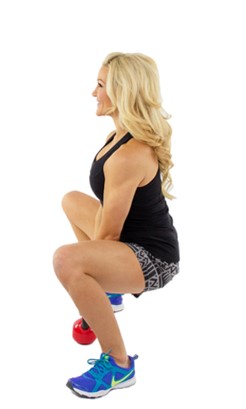
To teach someone how to perform a proper sumo deadlift, first teach them how to do a proper goblet squat. We call the sumo deadlift with the kettlebell a “reverse squat.” One is the mirror image of the other. The sumo deadlift with a kettlebell is, factually, a partial goblet squat: done with the payload dangling on relaxed arms instead of being tucked under the chin. Inhale on the descent with ever increasing muscle tension as you pull yourself down to the bell. Barely touch the bell to the floor at the turnaround with NO BOUNCING. Exhale on the ascent with an upright torso. This is the preamble to sumo deadlifting with the barbell. It becomes a small hop to morph from pristine sumo kettlebell deadlifting using a big bell into sumo barbell deadlifting.
Sumo Barbell Deadlift
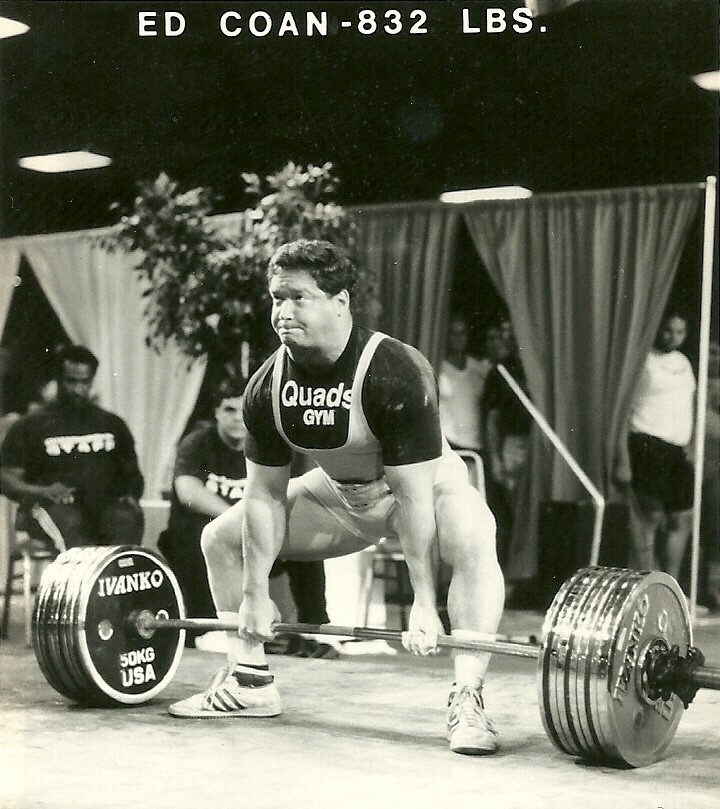
The goal is to achieve a perfect technical transference of the deadlift technique developed on the sumo kettlebell deadlift to the loaded barbell. Using a barbell means the payload is now forward, in front of the shins instead of between the legs. Our deadlift technique is predicated on the straight-line deadlift pull with vertical shins at take-off. To counteract this inferior leverage the torso position must be as upright as possible. The larger the inhale on the descent the greater the muscular tension will be as you pull yourself down to the bar maintaining an upright torso. Reach down and grab the barbell between the thighs using a narrow grip. The launch occurs when the shoulders are directly over the barbell. Do not let the tailbone shoot up at take-off.
Conventional Deadlift
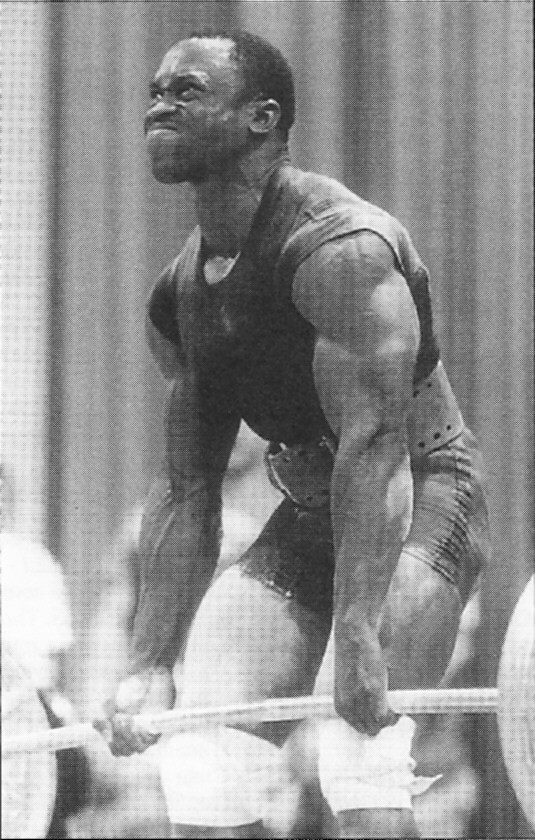
More world records have been set using conventional deadlift technique than any other style. Whereas the sumo deadlift is all about leg power, the conventional deadlift spreads the effort between legs, lower back and upper back. The legs break the conventional deadlift from the floor. The lower back and hip-hinge spring into action as the barbell reaches the knees. The mid and upper back leap in as the bar approaches lockout – this is a muscular ballet, a synchronized firing of muscles and muscle groups in a tightly choreographed sequence of muscular interplay. The barbell will lower itself in a perfect straight line, if you, the deadlifter allow it. What better way to learn the straight-line upward pull then lowering in a perfect straight line immediately beforehand? Straight up and straight down is maximally efficient.
Left: Bell pulls the bar upward in a straight line never allowing the shoulders to get in front of the bar.
Conventional Deadlift w/ Straps (overload)
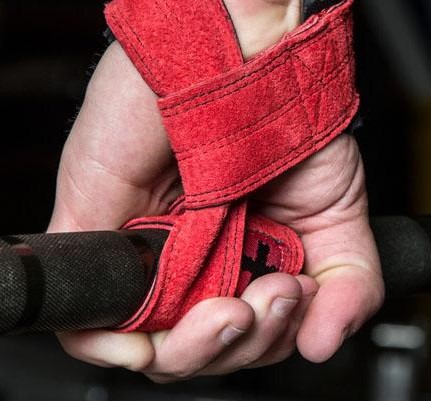
Straps allow us to overload the muscles of the back. Experienced deadlifters know that the lifter’s grip is the limiting factor. Straps eliminate the limiting factor, thereby enabling the deadlifter to attack the back muscles to a degree unthinkable without straps. Straps allow us to pull long after a failed grip would have ended the deadlift set. From a physiological perspective, extra reps mean extra growth; more power, size and strength. Straps are perfect for our “slowed release” eccentric lowering. Because we lower our deadlift negatives with slowed precision, straps take grip worries off the table. You can concentrate on the position and technique without worry about the grip giving way.
Supplemental Deadlift Variations
Deadlifts Off Blocks or Boards with Varying Heights: The theory is that by standing on a board or box while deadlifting, the start, the take-off, the launch, is made much more difficult. Which is absolutely true. Repeated deadlift practice done using the “disadvantaged start” makes the regular deadlifting easy by comparison. The controversy is if block work is “transferrable” and if so, what height board or block is ideal? The gamut can run from standing atop a 1-inch plywood platform to standing on a block so high the barbell is barely above the feet.
Partial Deadlifts Done in a Power Rack: The power rack breaks the deadlift down into segments and works on strengthening weak segments. The deadlift is usually broken down into two parts, from floor to just below the knees, and, right above knees to lockout. The older lifters broke the deadlift down into three parts: floor to below knee; below knee to mid-thigh; mid-thigh to lockout. Reps were usually kept to 3 or less. Often the final rep of a set was held against the top pin until the lifter was unable. Excruciating, yet quite effective in small doses.
MARTY GALLAGHER // Purposeful Primitive Author
We want to hear from you!
Tell us about your training experiences and feel free to forward any training questions to us by clicking on the button below.