Purposeful Primitive Squats
The key to human power is leg power and the key to attaining leg power lies in mastering squats. A properly performed full squat stimulates more muscles and to a deeper and more profound degree than any other progressive resistance exercise. When it comes to infusing the human body with overall strength and power, the properly performed squat is (always and forever) the single most effective progressive resistance exercise.
Our squat technique has five sequential variations; each subsequent squat technique is similar yet dissimilar to its predecessor and successor. Each sequential squat variation builds on the technique learned to that point. We establish a squat theme and then introduce four sequential variations upon that core theme.
Squat Ideal
Our technical premise is to make squatting “all about legs.” Learn how to do a technically perfect ultra-deep bodyweight squat first then work through the subsequent variations of goblet squat, front squat and high bar/low bar barbell squat. Below are the key technical points that apply to all squat variations.
Key Technical Points
Bodyweight Squat
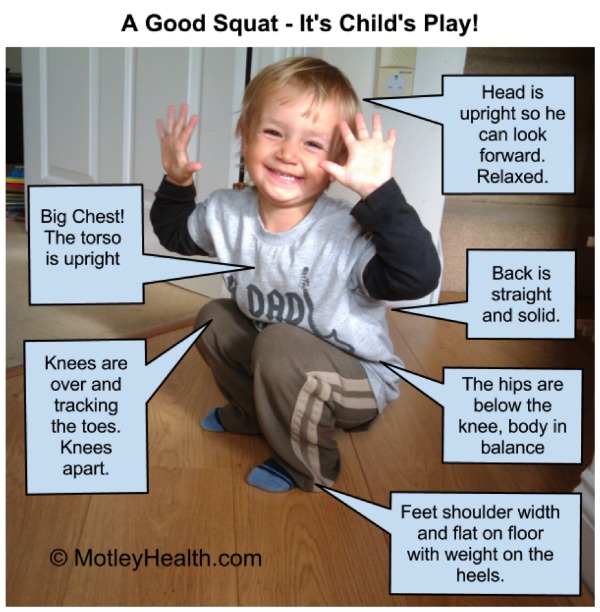
When learning to squat it is important to first learn how to perform a technically correct ultra-deep no weight squat. Life causes us to lose this innate ability; our strategy is to "relearn" and recapture lost "primordial wisdom." The goal is to perform full ROM bodyweight squats using pristine technique. Crawl before you walk and walk before you run – how can anyone be expected to perform a perfect barbell squat if they are unable to perform a perfect squat with bodyweight alone? Check out the picture and note knees over ankles, vertical shins, upright torso; pelvis is tucked under. This is our core technique, our foundational position for all subsequent squats. New to squatting? Check out this link on good squat posture!
Kettlebell Goblet Squat
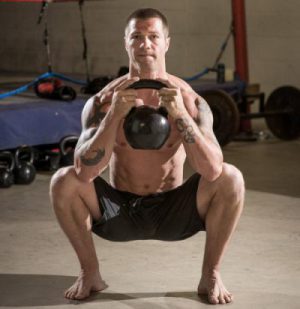
After mastering the bodyweight squat the challenge becomes – how do we increase the squat payload while retaining the optimal squat technique we worked so hard to attain in our bodyweight squatting? A kettlebell or dumbbell can be held under the chin, or a barbell plate clutched to the chest to create additional squat payload. With the introduction of these payload-enhancing tools, great care needs to be taken to not allow the archetypical squat technique (ingrained in no-weight squats) to be corrupted, degraded or compromised. Goblet squatting allows us to dramatically increase squat resistance by grasping these external payloads.
Front Squat
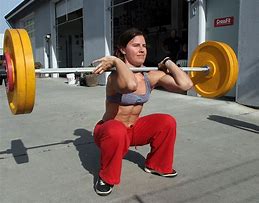
At some point, the poundage used in the goblet/dumbbell or plate exercise becomes too heavy. When the implement interferes with performance, it’s time to move on. Shift from goblet squatting to barbell front squatting. Start off with a set of bodyweight squats followed immediately by a set of goblet squats. Now replicate that technique using the barbell front squat utilizing the same technique with the barbell carried across the clavicles. Do not add poundage before you have mastered the technique using the lightest of weights.
High Bar Back Squat
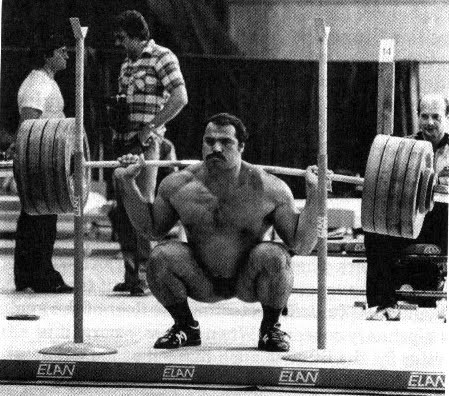
The challenge, when shifting from front squat to hi-bar back squat, is, again, making sure to successfully retain the precise technical archetype, learned on bodyweight squats, honed on goblet squats and successfully transferred to our front squats. Now these same technical parameters need be transferred to high bar back squatting. Now the barbell is on your shoulders and behind your neck. Though the barbell placement change, from front to back, might only be 6-10 inches, the technical obstacles are daunting.
Low Bar Back Squat
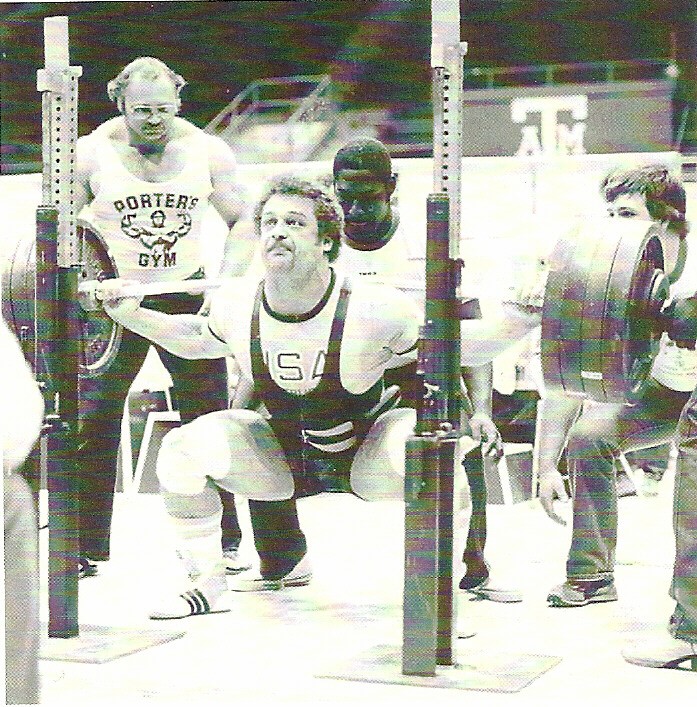
If the athlete successfully transitions from pristine front squats to technically perfect back squats, all the hard work is over: the only difference between hi-bar and low-bar squatting is the placement of the barbell on the back of the squatter, a difference of 2-5 inches. We need become adept at hi-bar before we are allowed to tackle low bar. Low-bar placement usually results in poundage improvements with no increase in strength required. What elite squatters have discovered is that by moving any payload closer to the exact center of balance, leverage is improved. Placing a barbell three full inches lower, from classic high bar to pro low bar, results in a significant increase in poundage-handling ability.
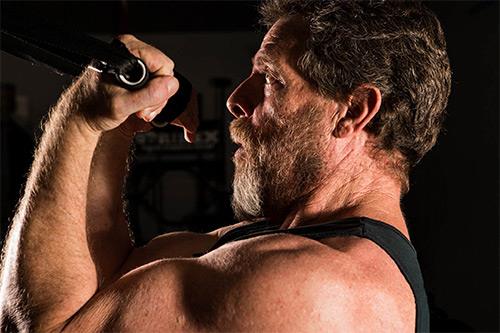
MARTY GALLAGHER // Purposeful Primitive Author
We want to hear from you!
Tell us about your training experiences and feel free to forward any training questions to us by clicking on the button below.